Engineering Processes for Advanced Functional Materials
Advanced functional materials depend on precise control of composition, phase and particle structure to deliver their functional property.
PrakriyaX helps translate material science into scalable, industrially reliable processes.
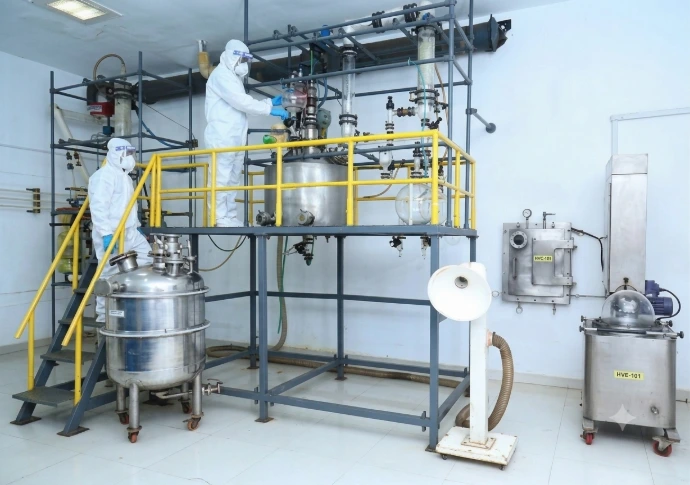
Advanced Functional Materials
Advanced functional materials cover functional ceramics, catalysts, specialty coating materials and engineered nanomaterials, where a specific structural, electronic or catalytic property defines the product's value. Typical products are manufactured through precipitation, sol-gel or solid-state synthesis routes followed by thermal treatment and particle engineering. Processing challenges include achieving phase purity, controlling particle size and surface characteristics, and maintaining dispersion stability where nanoscale or fine particles are involved. Process engineering is central to this industry because functional performance — catalytic activity, dielectric behaviour, optical or magnetic properties — is governed directly by the microstructure created during processing, meaning process control is inseparable from the product specification itself.
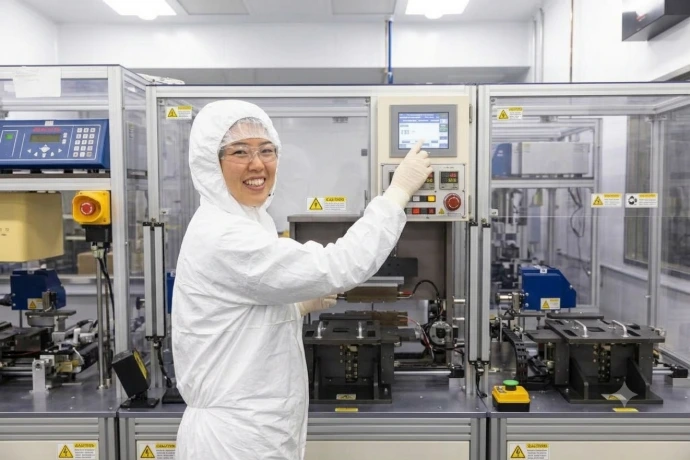
Materials & Products
Material / Product | Application | Typical Processing Requirement | Process Challenge |
|---|---|---|---|
Functional ceramic powders | Electronic components, sensors | Controlled phase and particle size | Phase purity and calcination control |
Catalyst materials | Industrial catalytic processes | High surface area, defined pore structure | Surface area and porosity control |
Specialty coating materials | Protective and functional coatings | Controlled particle size and dispersion | Dispersion stability |
Engineered nanomaterials | Advanced material applications | Narrow particle size distribution | Agglomeration control |
Precipitation / Sol-Gel Synthesis
Process Technologies
What it does?
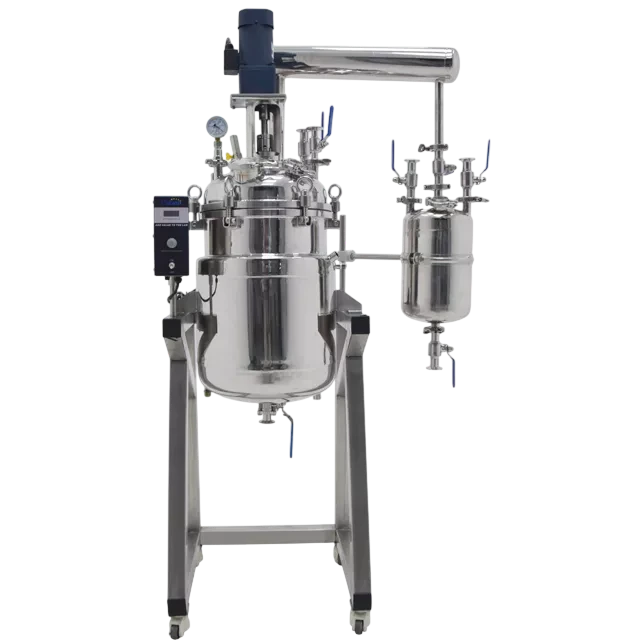
Builds the material structure from solution through controlled precipitation or gelation.
Why it matters?
Determines the base composition and initial particle structure.
Where it is used?
Synthesis stage.
Process outcome
Controlled precursor structure.
Calcination
Process Technologies
What it does?
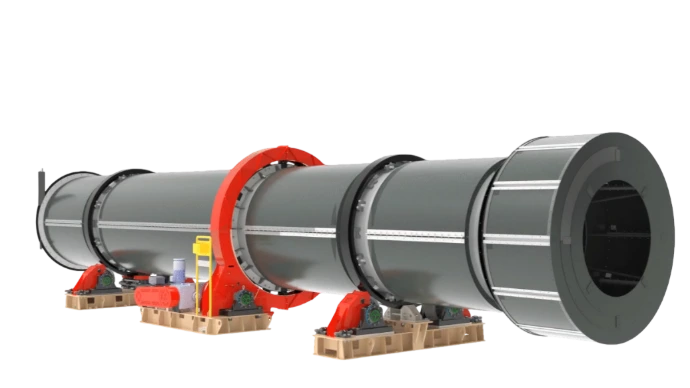
Converts precursor material into the target crystalline phase.
Why it matters?
Establishes the functional phase and removes residual organics.
Where it is used?
Thermal treatment stage.
Process outcome
Phase-pure functional material.
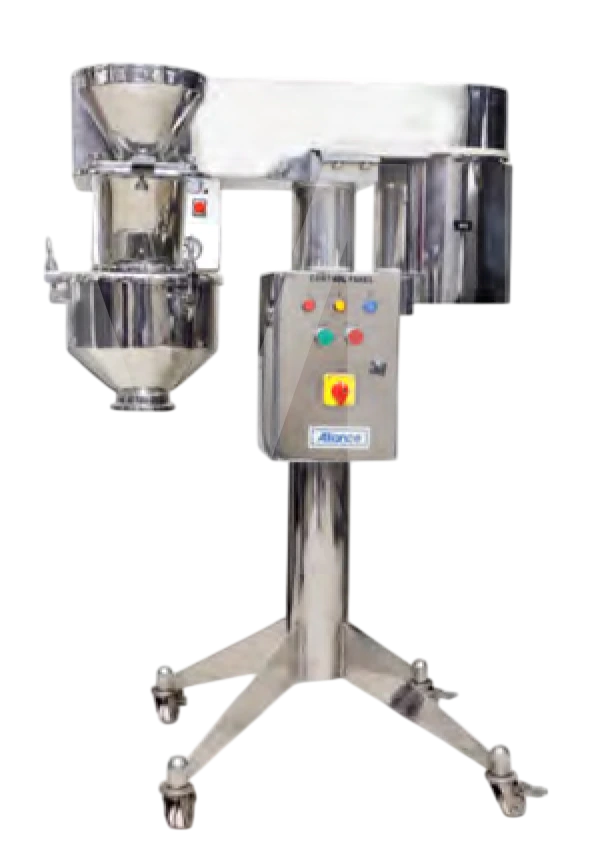
Milling & Classification
Process Technologies
What it does?
Refines particle size distribution to target specification.
Why it matters?
Particle size affects functional performance and processability.
Where it is used?
Post-calcination stage.
Process outcome
Target particle size distribution.
Surface Treatment
Process Technologies
What it does?
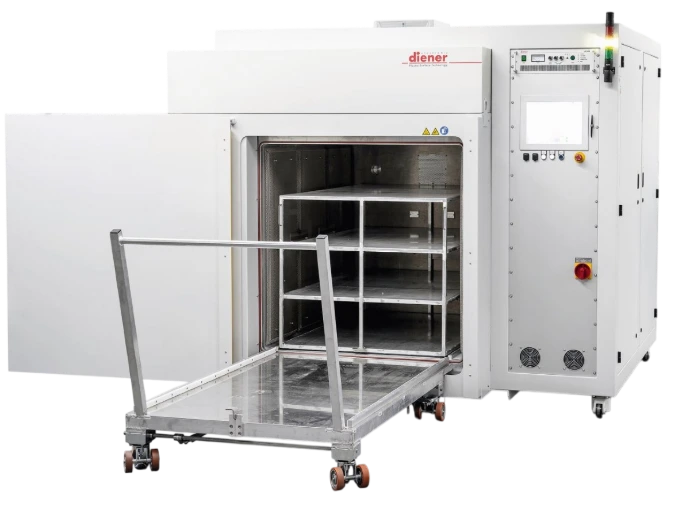
Modifies particle surface chemistry to improve dispersion or stability.
Why it matters?
Improves compatibility with downstream formulation.
Where it is used?
Final particle engineering stage.
Process outcome
Improved dispersion and stability.
Drying (Controlled Agglomeration Management)
Process Technologies
What it does?
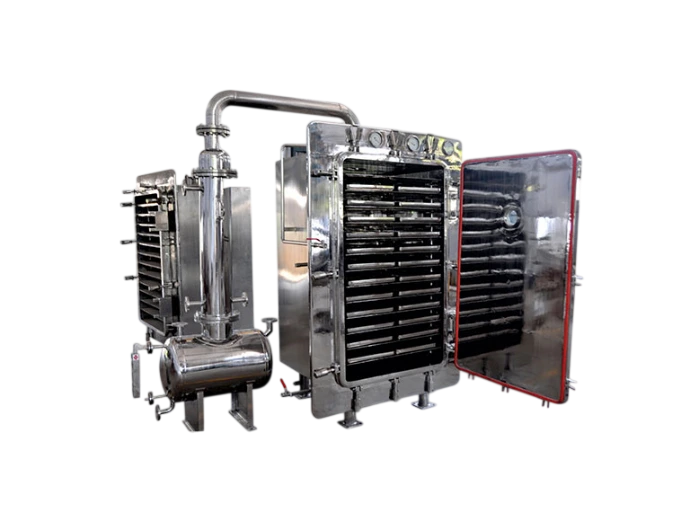
Removes moisture while limiting particle agglomeration.
Why it matters?
Uncontrolled drying can compromise particle size specification.
Where it is used?
Post-processing stage.
Process outcome
Free-flowing, dispersion-ready powder.
PrakriyaX Capabilities
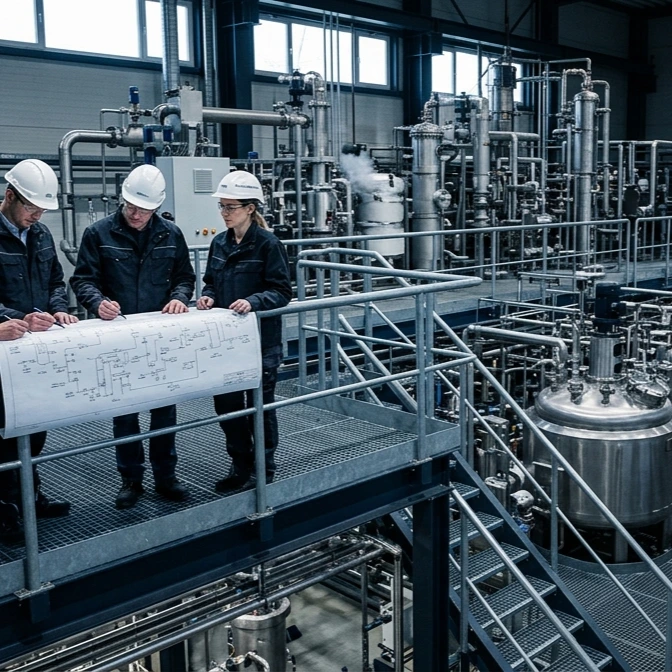
Applied to battery & energy materials, PrakriyaX capability spans the full value chain from early process concept through to plant implementation:
Process Development
- Evaluate routes against feedstock, product specifications and cost targets; develop concepts from bench data and literature.
- Plan and interpret lab/pilot trials and optimize yield, purity, consistency and cycle time.
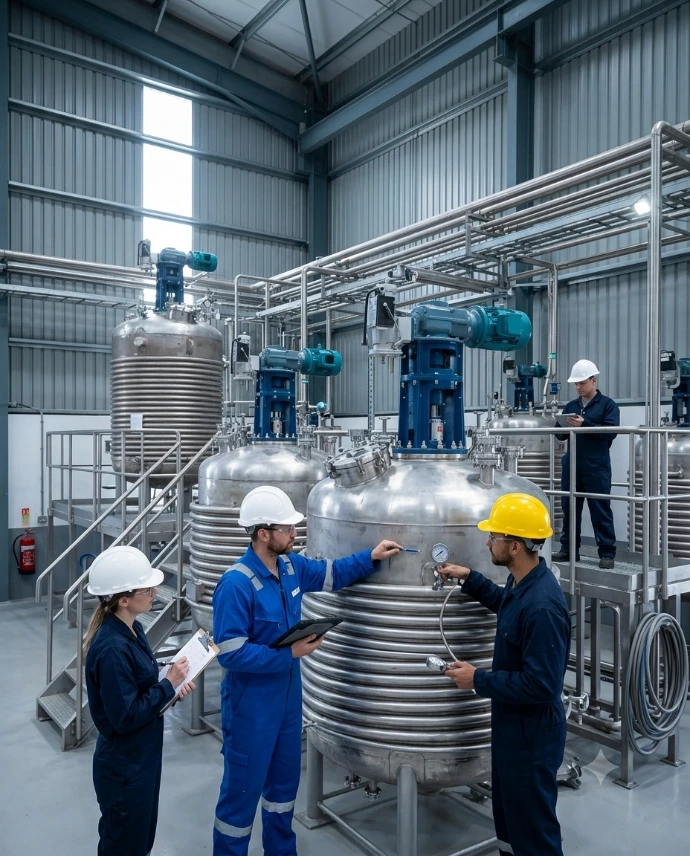
Process Engineering
Process Design — Develop mass & heat balances, equipment sizing, PFDs and key process parameters.
Estimate utility consumption and overall process requirements.
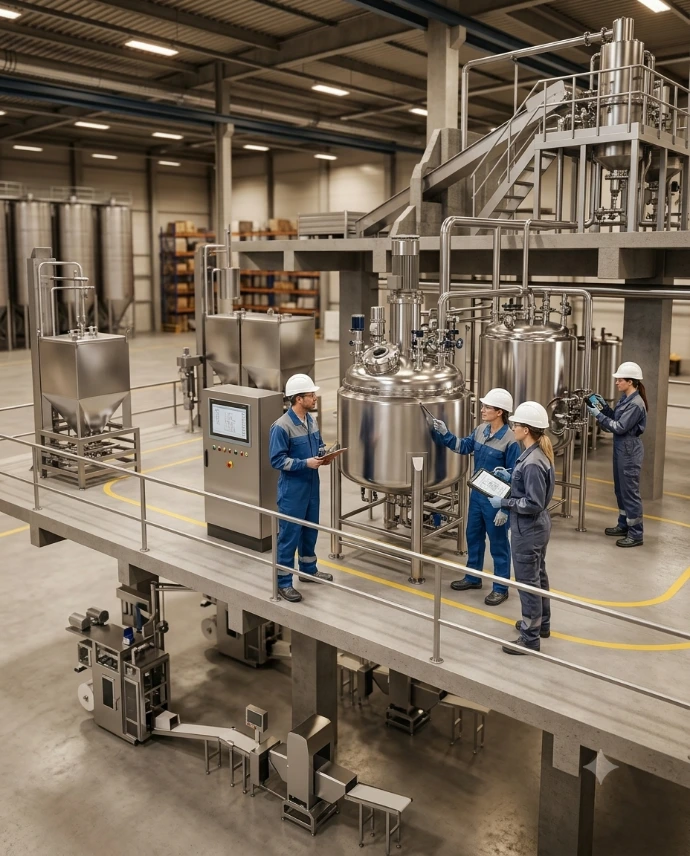
Scale-Up
Laboratory to pilot scale-up planning
Pilot to demonstration scale translation
Demonstration to industrial scale readiness review
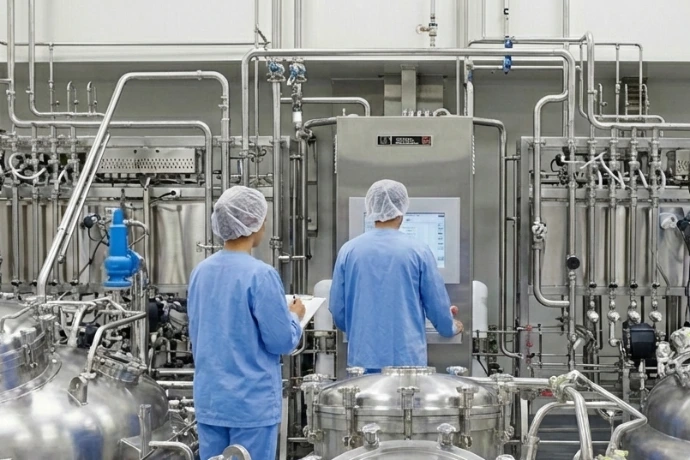
Technology Integration
Process technology selection and comparison
Equipment and unit operation integration
Process intensification opportunities
Automation and control considerations
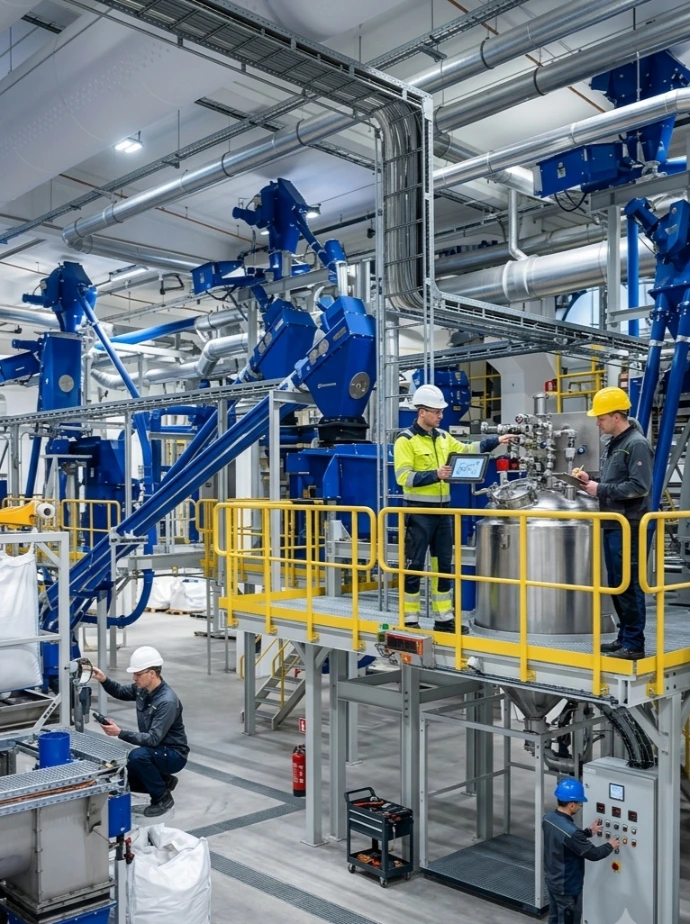
Project Support
Concept engineering and technology basis definition
Basic engineering package development
Detailed engineering coordination
Equipment specification development
Vendor and technology-provider coordination
Plant implementation and commissioning support
Process Technology Matrix
Process Requirement | Relevant Technology | Process Objective | Typical Outcome |
|---|---|---|---|
Controlled precursor structure | Precipitation / sol-gel synthesis | Defined composition and morphology | Consistent starting material |
Phase purity | Calcination | Target crystalline phase | Reliable functional performance |
Target particle size | Milling and classification | Narrow particle size distribution | Consistent processability |
Dispersion stability | Surface treatment | Improved particle compatibility | Stable formulated product |
Agglomeration control | Controlled drying | Maintain particle size specification | Free-flowing functional powder |
Key Process Parameters
Parameter | Why It Matters |
|---|---|
Particle size | Directly determines functional and processing performance. |
Purity | Trace contamination can significantly affect functional properties. |
Temperature | Calcination temperature determines phase and crystallinity. |
Residence time | Affects degree of phase conversion. |
Concentration | Affects precipitation or gelation kinetics. |
Surface area | A key specification for catalytic and functional performance. |
Have a Process Challenge?
Tell us about your material, process and scale-up requirements in Advanced functional materials
Frequently asked questions
Here are some common questions about our company.
Advanced functional materials are engineered materials designed to deliver specific physical, chemical, electrical, thermal, magnetic, optical or mechanical properties. Their performance depends strongly on composition, structure, morphology, particle size, surface characteristics and processing conditions.
PrakriyaX supports process development and engineering for advanced powders, functional oxides, carbon materials, ceramic materials, inorganic materials, conductive materials, specialty powders, surface-treated materials and other performance-driven material systems.
Advanced functional materials are used in energy storage, batteries, electronics, coatings, catalysts, ceramics, automotive, aerospace, chemical processing, renewable energy and other high-performance applications.
Advanced materials process engineering involves developing scalable manufacturing processes that control composition, particle characteristics, morphology, purity, phase, surface properties and other critical material attributes.
Depending on the material, processes can include precipitation, co-precipitation, chemical synthesis, solid-state reaction, hydrothermal processing, calcination, milling, classification, filtration, drying, coating and surface treatment.
Process development translates material chemistry and laboratory methods into repeatable, scalable and economically viable manufacturing processes while maintaining the required material properties and product consistency.
Yes. PrakriyaX can support process development from laboratory concepts, literature-based routes, existing synthesis methods or experimental data through pilot-scale development and industrial process design.
Yes. Scale-up considers changes in mixing, heat transfer, reaction kinetics, mass transfer, particle formation, drying, calcination and powder handling to achieve consistent material properties at larger production scales.
Particle size and particle-size distribution can strongly influence surface area, packing density, flowability, dispersion, reactivity, electrical properties and final product performance.
Particle engineering involves controlling particle size, morphology, shape, surface area, density, agglomeration and particle-size distribution to achieve the desired functional properties.
Particle-size distribution can be controlled through appropriate precipitation conditions, nucleation and growth control, milling, classification, dispersion and agglomeration management.
Surface treatment modifies the surface chemistry or physical characteristics of a material to improve properties such as dispersion, compatibility, stability, conductivity, chemical resistance or interaction with other materials.
Purity is controlled through raw-material selection, controlled synthesis, impurity removal, washing, filtration, precipitation, crystallization and other purification operations, depending on the material and specification.
Material morphology can influence surface area, packing, flowability, reaction behavior, dispersion and functional performance. Process conditions must therefore be controlled to achieve the required particle morphology.
Calcination is a controlled thermal treatment used to promote phase formation, decomposition, crystallization, solid-state reactions or removal of volatile components. Temperature, atmosphere and residence time can significantly affect material properties.
Common challenges include maintaining composition, phase purity, particle-size distribution, morphology, surface properties, mixing uniformity and thermal-processing conditions when moving from laboratory to larger-scale equipment.
Process optimization can target material performance, purity, yield, particle properties, energy consumption, production rate, cycle time, raw-material utilization and manufacturing cost.
Yes. PrakriyaX can evaluate existing processes for yield improvement, particle-property control, process consistency, energy reduction, throughput improvement, debottlenecking and cost optimization.
Drying removes moisture or process liquids while helping preserve the required particle characteristics, composition, morphology and downstream processing behavior.
Milling reduces particle size or breaks agglomerates, while classification separates particles according to size. Together, they help achieve a controlled particle-size distribution and powder specification.
Yes. PrakriyaX supports process development involving milling, classification, powder conditioning, particle-size control, drying, surface treatment and other powder-processing operations.
Yes. Material and energy balances can be developed across individual operations and complete process routes to support equipment selection, utility estimation, scale-up and process optimization.
Yes. Equipment selection can consider material characteristics, production capacity, particle behavior, mixing requirements, thermal processing, filtration, drying, milling and classification requirements.
Yes. PrakriyaX can develop process flow diagrams, material and heat balances, equipment requirements, process parameters and utility requirements for advanced material manufacturing processes.