Engineering Consistency Into
Specialty Chemical Manufacturing
Specialty and performance chemicals are formulated and manufactured to deliver a precise functional outcome — viscosity, adhesion, dispersion, reactivity or surface behavior.
PrakriyaX works with producers to translate chemistry into a reliable, scalable industrial process.
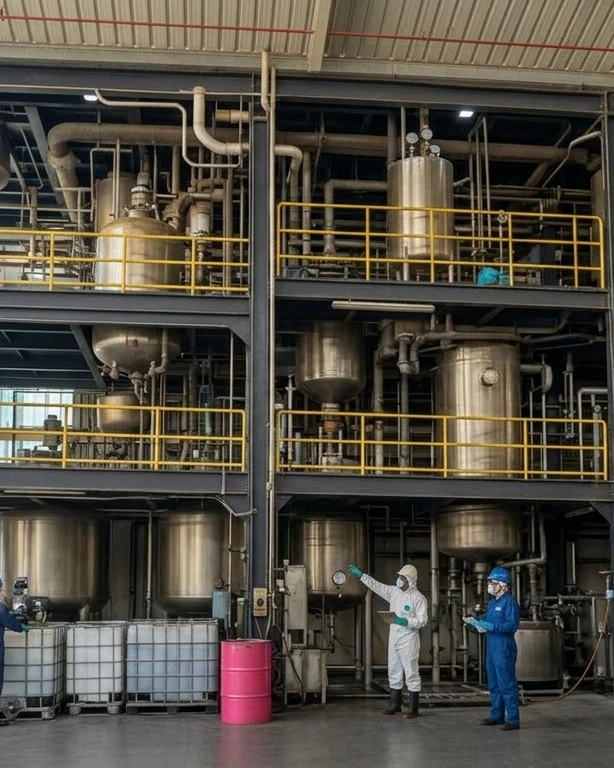
Specialty & Performance Chemicals
Specialty and performance chemicals are products where value comes from specific functional properties, such as additives, surfactants, rheology modifiers, resins, and process chemicals. Their performance depends heavily on reaction control, mixing, purification, drying, and consistent scale-up.
Process engineering ensures these properties remain consistent and repeatable from laboratory to industrial production.
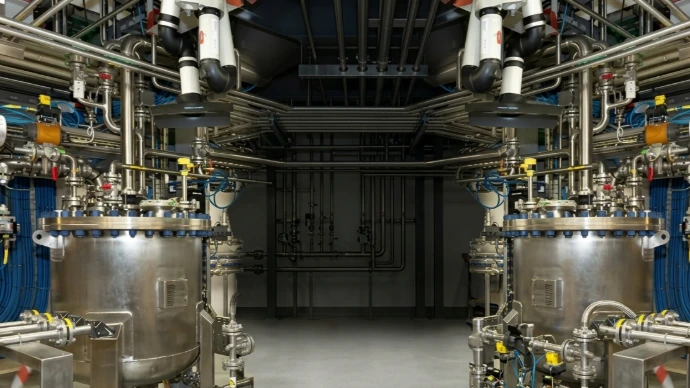
Materials & Products
Material / Product | Application | Typical Processing Requirement | Process Challenge |
|---|---|---|---|
Reactive polymer additives | Coatings, adhesives, sealants | Controlled reaction and consistent molecular structure | Reaction control and batch-to-batch consistency |
Surfactants and dispersants | Formulated industrial and consumer products | Precise composition and controlled viscosity | Mixing quality and emulsification control |
Rheology modifiers | Coatings, inks, construction chemicals | Defined particle or polymer structure | Process-dependent functional performance |
Process and textile chemicals | Industrial processing aids | Consistent purity and stable formulation | Purification and solvent recovery |
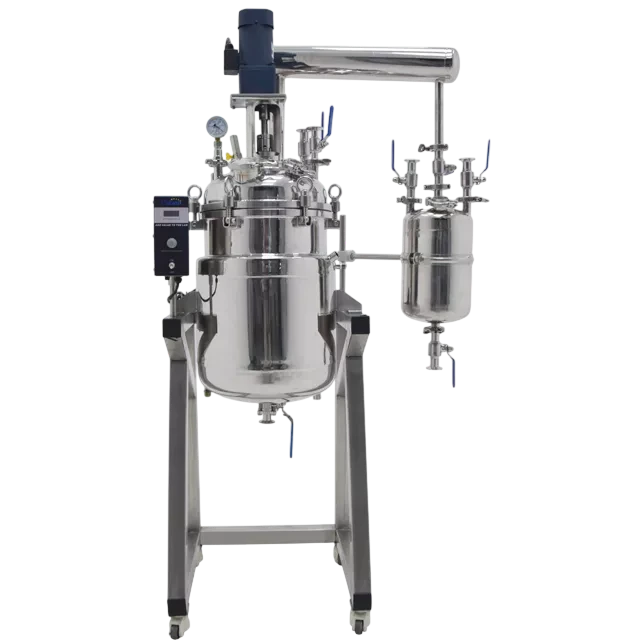
Controlled Reaction Engineering
Process Technologies
What it does?
Manages reaction rate, temperature and addition profile for multi-step or exothermic syntheses.
Why it matters?
Manages reaction rate, temperature and addition profile for multi-step or exothermic syntheses.
Where it is used?
Batch and semi-batch reactors for additive and resin. synthesis.
Process outcome
Reproducible molecular structure and reaction yield.
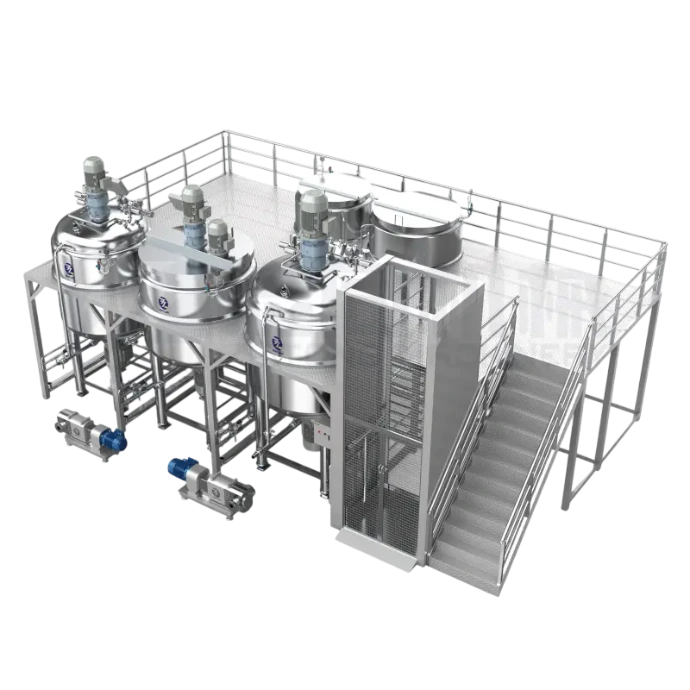
High-Shear Mixing & Emulsification
Process Technologies
What it does?
Achieves the droplet size and dispersion quality required for surfactant and dispersant systems.
Why it matters?
Directly determines product stability and functional performance.
Where it is used?
Formulation and blending stages.
Process outcome
Stable, uniform formulated product.
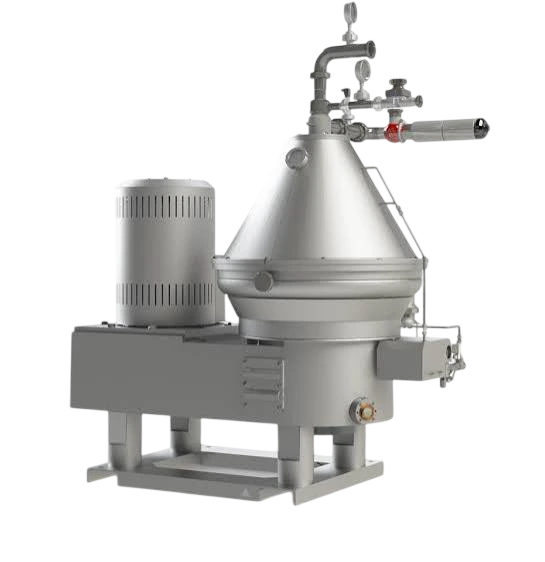
Phase Separation & Workup
Process Technologies
What it does?
Separates reaction phases and removes salts or by-products after synthesis.
Why it matters?
Removes impurities that would otherwise affect functional performance
Where it is used?
Post-reaction workup steps.
Process outcome
Clean intermediate ready for purification or formulation.
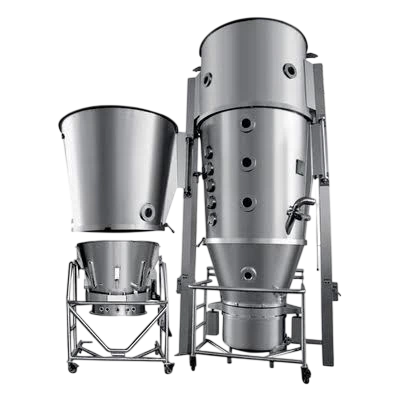
Drying & Formulation Finishing
Process Technologies
What it does?
Converts intermediate streams into the final supplied form — liquid concentrate, paste or powder.
Why it matters?
Determines handling properties and shelf stability.
Where it is used?
Final process stage before packaging.
Process outcome
Stable, ready-to-use commercial product.
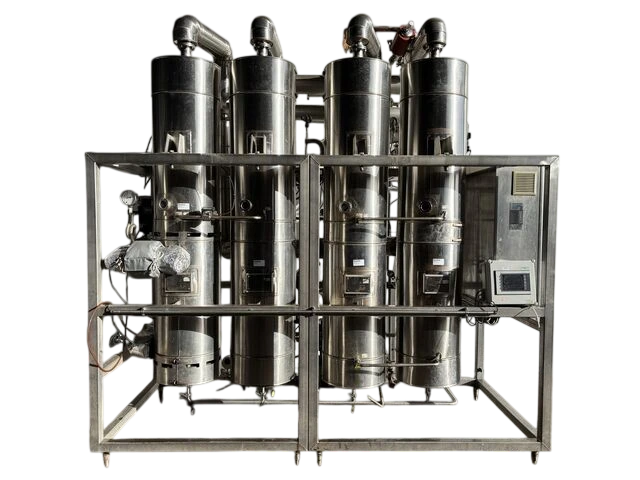
Distillation & Solvent Recovery
Process Technologies
What it does?
Recovers process solvents and removes volatile by-products.
Why it matters?
Reduces raw material cost and improves process sustainability.
Where it is used?
Downstream of reaction and workup.
Process outcome
Reduced solvent consumption and lower waste generation.
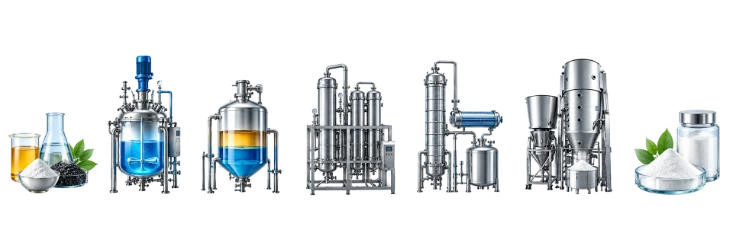
Representative Process Flow
Raw Material & Feedstock → Controlled Reaction → Workup & Phase Separation → Purification → Solvent Recovery → Drying / Formulation → Specialty Chemical Product
PrakriyaX Capabilities
Applied to specialty & performance chemicals, PrakriyaX capability spans the full value chain from early process concept through to plant implementation:
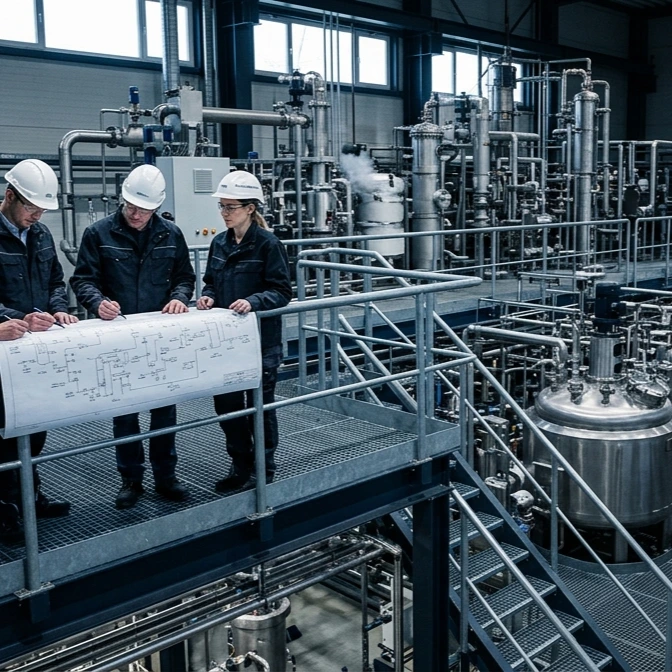
Process Development
- Evaluate routes against feedstock, product specifications and cost targets; develop concepts from bench data and literature.
- Plan and interpret lab/pilot trials and optimize yield, purity, consistency and cycle time.
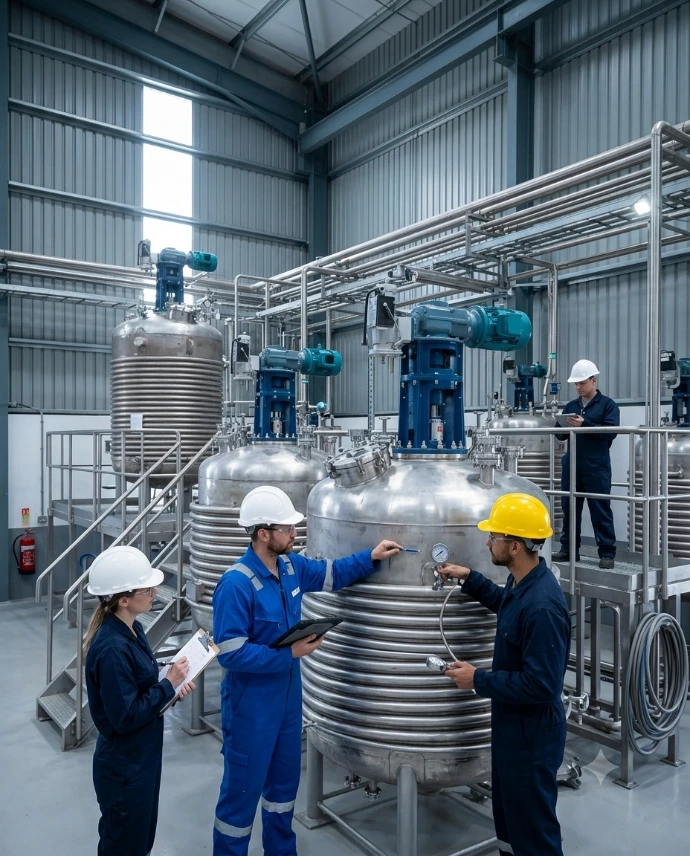
Process Engineering
Process Design — Develop mass & heat balances, equipment sizing, PFDs and key process parameters.
Estimate utility consumption and overall process requirements.
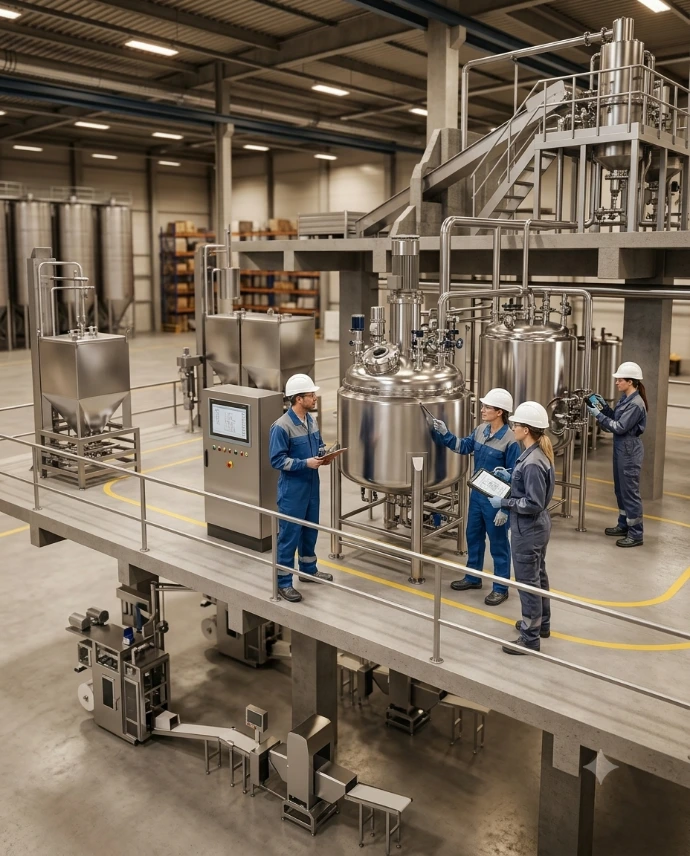
Scale-Up
Laboratory to pilot scale-up planning
Pilot to demonstration scale translation
Demonstration to industrial scale readiness review
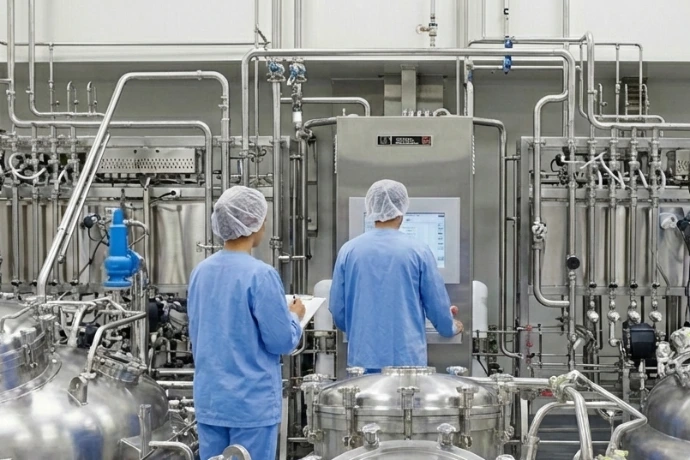
Technology Integration
Process technology selection and comparison
Equipment and unit operation integration
Process intensification opportunities
Automation and control considerations
Project Support
Concept engineering and technology basis definition
Basic engineering package development
Detailed engineering coordination
Equipment specification development
Vendor and technology-provider coordination
Plant implementation and commissioning support
Process Technology Matrix
Process Requirement | Relevant Technology | Process Objective | Typical Outcome |
|---|---|---|---|
Controlled exothermic reaction | Batch/semi-batch reaction engineering | Stable reaction profile | Consistent product structure |
Uniform dispersion or emulsion | High-shear mixing | Target particle/droplet size | Stable formulated product |
Impurity and by-product removal | Phase separation, purification | Clean intermediate | On-spec functional performance |
Solvent reuse | Distillation / solvent recovery | Lower raw material consumption | Improved process economics |
Stable final form | Drying / finishing | Defined handling properties | Consistent commercial product |
Key Process Parameters
Parameter | Why It Matters |
|---|---|
Temperature | Controls reaction rate and selectivity in exothermic syntheses. |
pH | Affects reaction pathway, stability and workup behaviour. |
Viscosity | Determines mixing quality and downstream processability. |
Residence time | Influences conversion and by-product formation. |
Concentration | Affects reaction kinetics and product consistency. |
Purity | Defines whether the product meets functional specification. |
New Application Areas — Where These Processes Create Value
Industrial and architectural coatings

Adhesives and sealants

Personal care formulations

Textile processing chemicals
Construction chemical additives
Have a Process Challenge?
Tell us about your material, process and scale-up requirements in specialty & performance chemicals.
Discuss Your Process →Frequently asked questions
Here are some common questions about our company.
Specialty chemicals are high-value chemical products designed to deliver specific performance properties such as adhesion, dispersion, stability, surface activity, rheology, conductivity, lubrication or chemical resistance. Unlike commodity chemicals, their value is primarily based on functionality and performance.
PrakriyaX supports process development for specialty and performance chemicals including chemical intermediates, additives, surfactants, dispersants, coating additives, polymer additives, functional materials, rheology modifiers, catalysts, and other performance-driven chemical products.
Commodity chemicals are generally produced in large volumes with cost and basic chemical specifications as major drivers. Specialty chemicals are typically produced for specific applications where purity, functionality, particle properties, formulation, consistency and performance are critical.
Specialty chemical manufacturing may involve batch or continuous reactions, controlled addition, mixing, crystallization, precipitation, extraction, filtration, washing, drying, distillation, solvent recovery and formulation depending on the product and required specifications.
Common challenges include reaction control, heat and mass transfer, mixing, phase separation, crystallization, filtration, drying, impurity removal, solvent recovery and maintaining consistent product properties from batch to batch.
Process engineering converts laboratory chemistry into a controlled, scalable manufacturing process by defining process parameters, equipment requirements, operating ranges, material balances, heat balances, purification steps and process controls.
Yes. PrakriyaX can support the development of process concepts from laboratory data, literature, existing chemistry or early-stage development work through scale-up and industrial process design.
Yes. PrakriyaX supports lab-to-pilot and pilot-to-industrial scale-up, with focus on reaction kinetics, mixing, heat transfer, mass transfer, residence time, separation and other scale-dependent process parameters.
Scale-up involves translating laboratory chemistry into an industrially practical process while maintaining yield, purity, selectivity, product consistency and safety. Equipment selection, mixing, heat transfer, residence time and separation performance are evaluated at each scale.
Product consistency can be improved by establishing critical process parameters, controlled operating ranges, appropriate equipment design, consistent raw-material specifications and standardized workup and finishing operations.
Yield can be improved by optimizing reaction conditions, reagent ratios, temperature, residence time, mixing, reaction sequence, workup, separation and recovery operations while minimizing unwanted side reactions and material losses.
Purity can be improved through appropriate reaction control, impurity management, crystallization, precipitation, extraction, washing, filtration, distillation and other purification techniques selected according to the product and impurity profile.
Mixing directly affects reaction uniformity, heat transfer, mass transfer, reagent distribution and product consistency. Proper agitator selection and mixing design become increasingly important during scale-up.
Reaction engineering helps define and control temperature, pressure, concentration, feed rate, mixing, residence time and reaction conditions to achieve the required conversion, selectivity, yield and product quality.
Depending on the chemistry, separation may include filtration, centrifugation, extraction, crystallization, precipitation, phase separation, evaporation and distillation.
Solvent recovery systems are designed based on solvent properties, composition and process requirements. Distillation, evaporation and other separation technologies can be used to recover solvents for reuse and reduce operating costs and waste.
Yes. Process optimization can target yield, purity, cycle time, solvent consumption, energy consumption, raw-material efficiency, throughput, product consistency and overall manufacturing cost.
Yes. Process engineering can identify opportunities to reduce cost through higher yield, lower solvent consumption, shorter cycle times, improved recovery, optimized utilities, reduced material losses and better equipment utilization.
Yes. Cycle time can be evaluated across reaction, cooling/heating, workup, filtration, washing, drying, purification and solvent recovery steps to identify bottlenecks and optimization opportunities.
PrakriyaX evaluates the complete process route—from raw materials and reaction chemistry through separation, purification, solvent recovery and final product finishing—to develop a technically feasible and scalable manufacturing process.
Yes. Equipment requirements can be developed based on process chemistry, throughput, operating conditions, material properties, mixing requirements, heat transfer, separation characteristics and scale-up considerations.
Yes. Process engineering deliverables can include process flow diagrams (PFDs), material balances, heat balances, equipment sizing philosophy, process parameters, utility requirements and process design documentation.
Specialty chemical processes often require greater attention to product functionality, impurity profiles, batch consistency, reaction selectivity, purification, particle properties and flexible manufacturing, rather than simply maximizing production volume.
Yes. PrakriyaX supports both new process development and improvement of existing plants, including process troubleshooting, debottlenecking, optimization, scale-up and process modification.
Useful inputs include product specifications, raw-material information, laboratory or pilot data, existing process descriptions, reaction conditions, production targets and known process limitations. The level of information can vary depending on the project stage.