Process Engineering for Critical Mineral Refinement
Critical mineral processing turns ore, concentrate or brine into refined, battery- and industry-grade material. PrakriyaX supports the leaching, separation and purification processes that make this transformation efficient and scalable.
Critical Mineral Processing
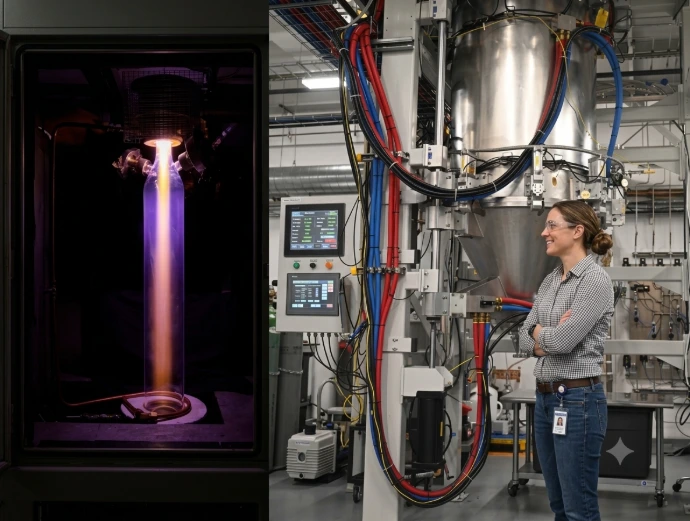
Critical mineral processing covers the refinement of lithium, cobalt, nickel, manganese and rare earth materials from ore, concentrate or brine feedstocks into refined salts or metals used in battery and industrial applications. Typical products include lithium carbonate and hydroxide, nickel and cobalt sulfates, and separated rare earth compounds. Processing challenges include achieving efficient and selective leaching, separating chemically similar metals from one another, removing impurities to meet battery-grade or industrial specifications, and managing water and reagent consumption. Process engineering is critical in this industry because the economics and environmental footprint of mineral processing are determined directly by leaching efficiency, separation selectivity and reagent recovery — incremental process improvements have a large impact at industrial scale.
Materials & Products
Material / Product | Application | Typical Processing Requirement | Process Challenge |
|---|---|---|---|
Lithium-bearing ore / brine concentrate | Lithium carbonate / hydroxide production | Efficient lithium extraction and purification | Selective leaching and impurity separation |
Nickel and cobalt concentrates | Battery precursor sulfates | Selective metal separation | Solvent extraction selectivity |
Rare earth concentrates | Magnet and electronics manufacture | Individual rare earth separation | Separation of chemically similar elements |
Manganese ore / concentrate | Battery-grade manganese sulfate | High-purity manganese product | Impurity removal from complex ore matrix |
Precipitation / Sol-Gel Synthesis
Process Technologies
What it does?
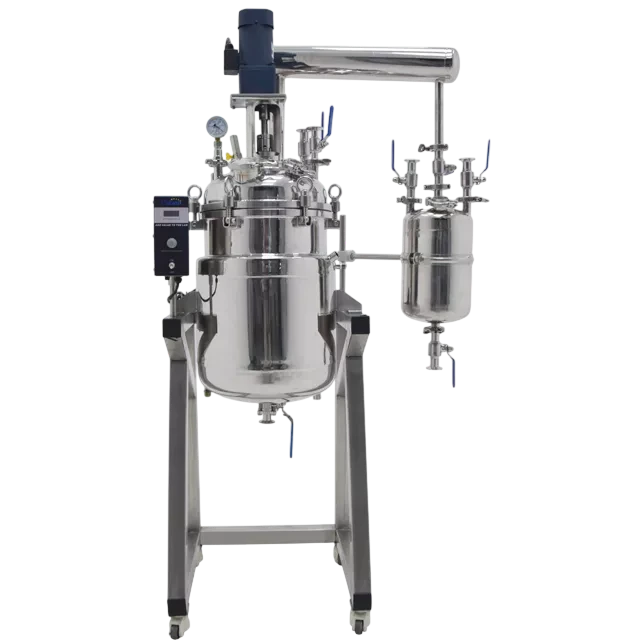
Dissolves target metals from ore or concentrate into a process solution.
Why it matters?
The foundation step determining overall metal recovery.
Where it is used?
Front-end of the process route
Process outcome
Metal-bearing leach solution.
Solid-Liquid Separation
Process Technologies
What it does?
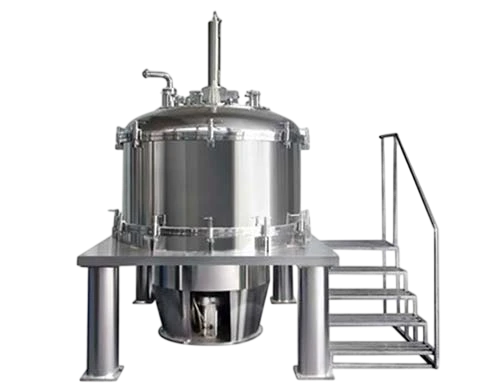
Separates leach solution from residual solids.
Why it matters?
Required to isolate the pregnant leach solution for purification.
Where it is used?
Downstream of leaching.
Process outcome
Clarified process solution.
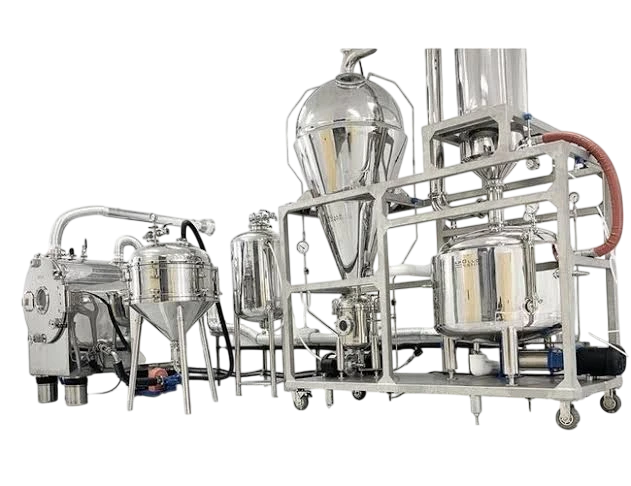
Solvent Extraction
Process Technologies
What it does?
Selectively transfers target metals between aqueous and organic phases.
Why it matters?
Enables separation of chemically similar metals.
Where it is used?
Purification stage.
Process outcome
Selectively separated metal streams.
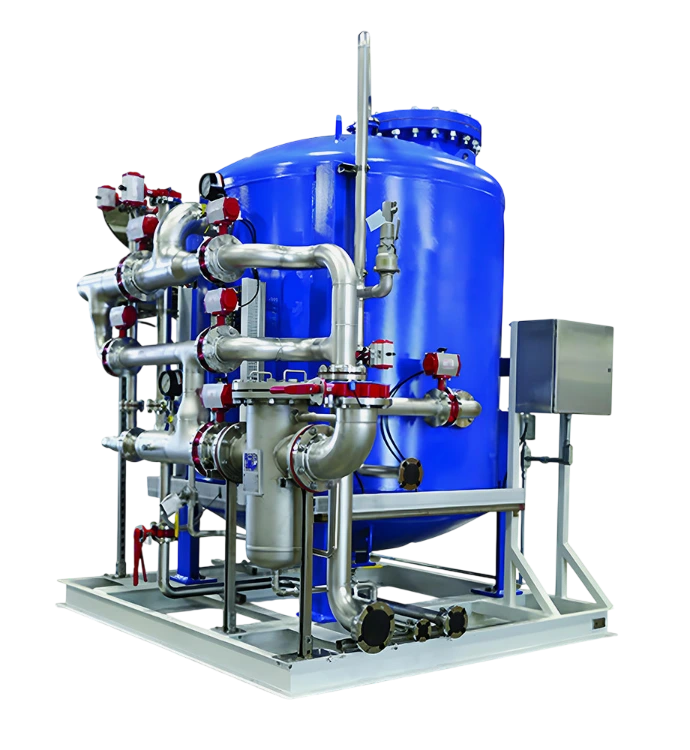
Ion Exchange
Process Technologies
What it does?
Selectively captures target ions from process solution using resin media.
Why it matters?
Complements solvent extraction for fine purification or low-concentration streams.
Where it is used?
Purification / polishing stage.
Process outcome
Polished, low-impurity solution.
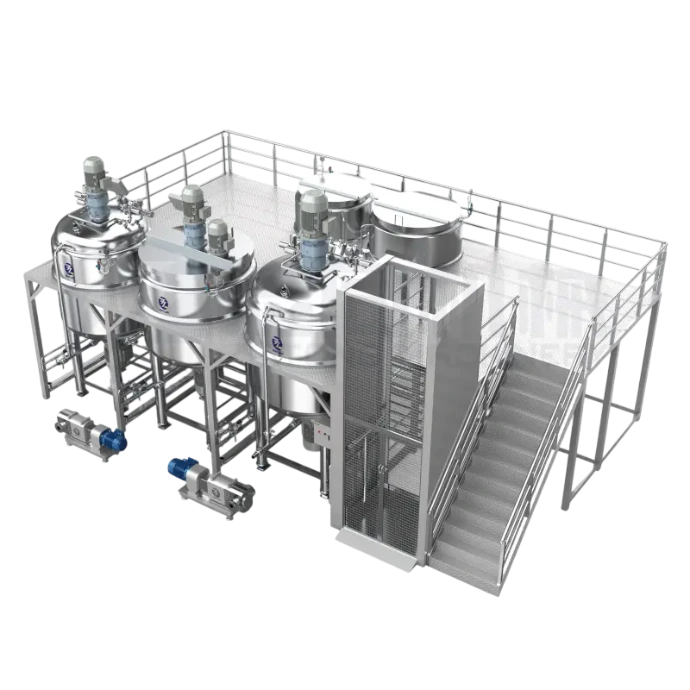
Precipitation / Crystallisation
Process Technologies
What it does?
Converts purified solution into the final solid mineral product.
Why it matters?
Defines final product form and purity.
Where it is used?
Final process stage.
Process outcome
Refined mineral salt product.
PrakriyaX Capabilities
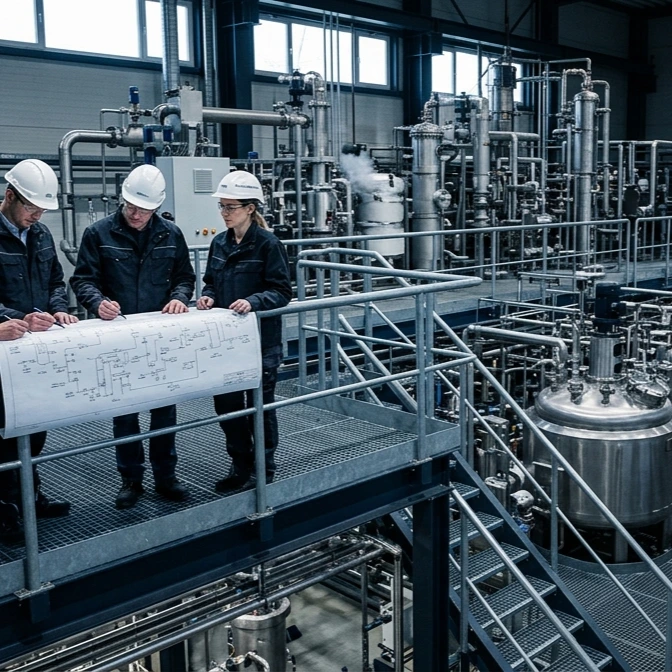
Applied to battery & energy materials, PrakriyaX capability spans the full value chain from early process concept through to plant implementation:
Process Development
- Evaluate routes against feedstock, product specifications and cost targets; develop concepts from bench data and literature.
- Plan and interpret lab/pilot trials and optimize yield, purity, consistency and cycle time.
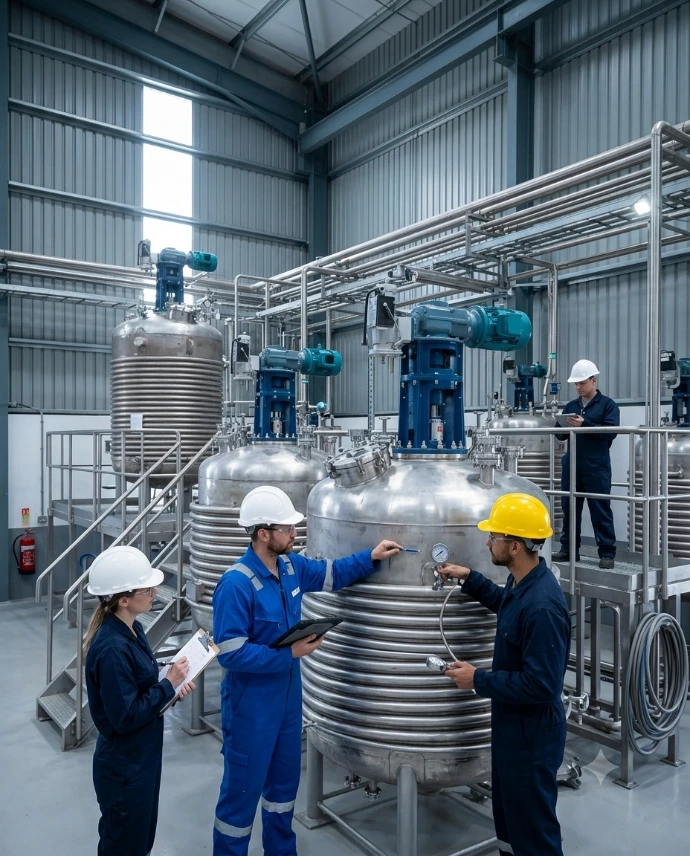
Process Engineering
Process Design — Develop mass & heat balances, equipment sizing, PFDs and key process parameters.
Estimate utility consumption and overall process requirements.
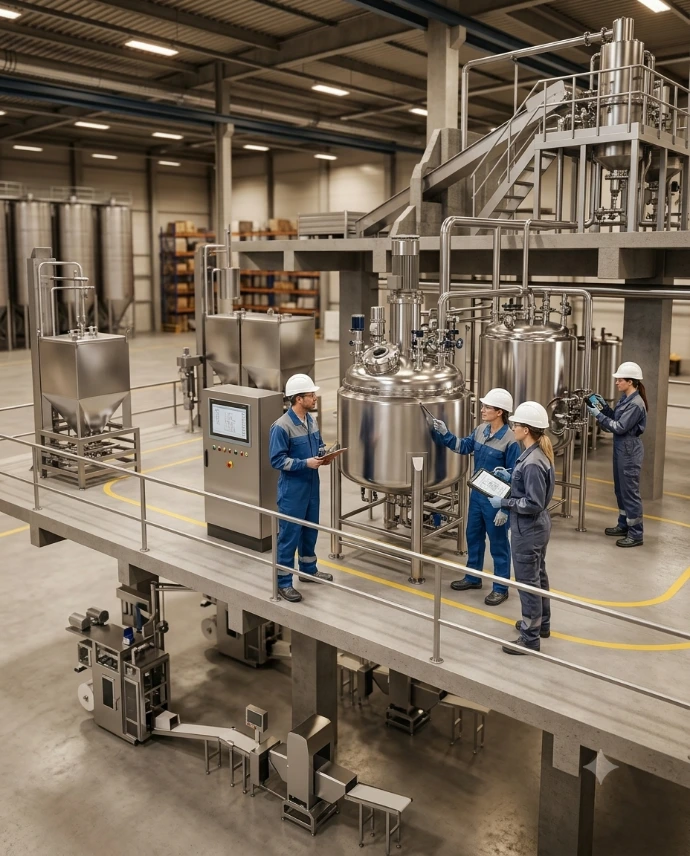
Scale-Up
Laboratory to pilot scale-up planning
Pilot to demonstration scale translation
Demonstration to industrial scale readiness review
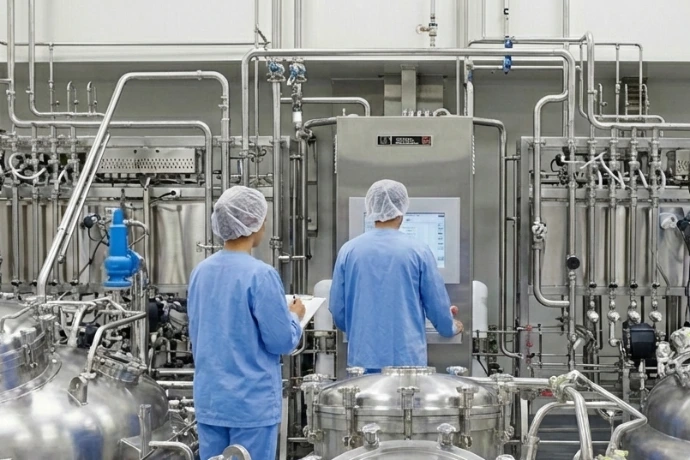
Technology Integration
Process technology selection and comparison
Equipment and unit operation integration
Process intensification opportunities
Automation and control considerations
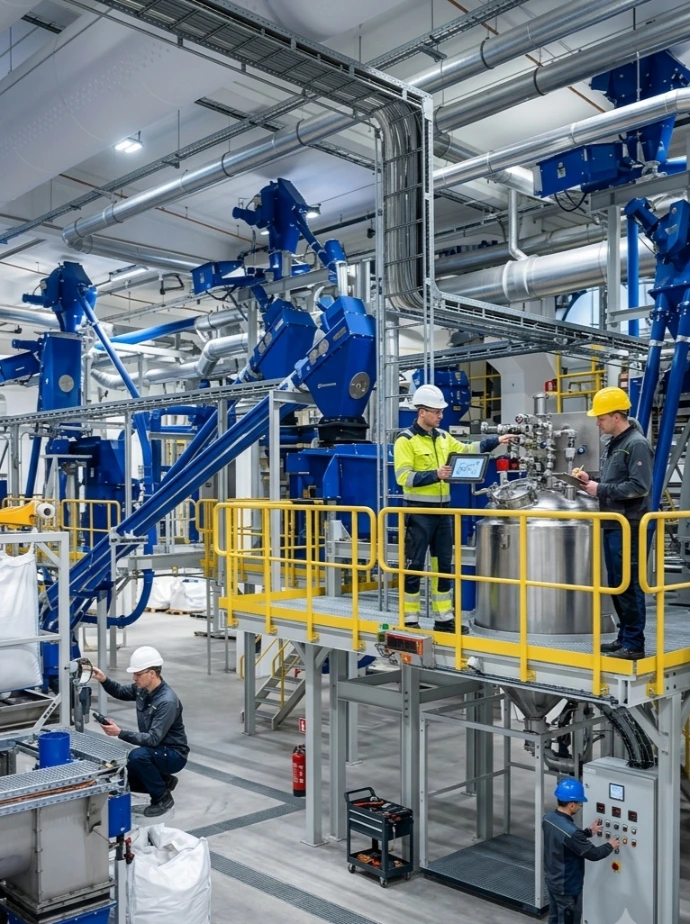
Project Support
Concept engineering and technology basis definition
Basic engineering package development
Detailed engineering coordination
Equipment specification development
Vendor and technology-provider coordination
Plant implementation and commissioning support
Process Technology Matrix
Process Requirement | Relevant Technology | Process Objective | Typical Outcome |
|---|---|---|---|
Efficient metal dissolution | Leaching | Maximise metal recovery | High-recovery leach solution |
Clarified process solution | Solid-liquid separation | Remove residual solids | Clean feed to purification |
Selective metal separation | Solvent extraction | Separate chemically similar metals | Purified individual metal streams |
Fine purification | Ion exchange | Remove trace impurities | Battery/industrial-grade purity |
Final product form | Precipitation / crystallisation | Defined salt structure and purity | Refined mineral product |
Key Process Parameters
Parameter | Why It Matters |
|---|---|
pH | Controls leaching efficiency and selective precipitation. |
Concentration | Affects extraction and crystallisation efficiency. |
Temperature | Influences leaching kinetics and solvent extraction equilibrium. |
Recovery | A primary economic metric for mineral processing. |
Purity | Determines whether product meets battery- or industrial-grade specification. |
Residence time | Affects leaching completeness and reactor sizing. |
Have a Process Challenge?
Tell us about your material, process and scale-up requirements in critical mineral processing.
Frequently asked questions
Here are some common questions about our company.
Critical mineral processing involves the extraction, concentration, separation, purification, and conversion of minerals that are strategically important for energy, electronics, advanced manufacturing, and other high-value industries. Process engineering is essential for achieving high recovery, purity, consistent product quality, and economically viable processing routes.
Critical minerals are minerals considered important because of their economic value, strategic applications, supply-chain importance, or limited availability. Examples include lithium, cobalt, nickel, graphite, manganese, rare earth elements, copper, and other specialty mineral resources.
Critical mineral processing can involve a wide range of mineral systems, including lithium-bearing minerals, nickel and cobalt ores, manganese, graphite, rare earth minerals, copper-bearing materials, and other strategic mineral concentrates.
Depending on the mineral and feedstock, processing may involve crushing, grinding, classification, beneficiation, flotation, leaching, precipitation, solvent extraction, ion exchange, filtration, washing, drying, calcination, crystallization, and purification.
Process engineering helps evaluate and optimize the complete processing route to improve mineral recovery, selectivity, product purity, throughput, energy efficiency, reagent consumption, and operating cost.
Yes. PrakriyaX can support process route evaluation, process development, laboratory and pilot-scale planning, process optimization, mass and heat balances, equipment selection, and scale-up engineering for critical mineral processing applications.
Process development can be evaluated for mineral concentrates, intermediate materials, industrial residues, recycled materials, and other secondary feedstocks, depending on their composition and target product requirements.
Beneficiation is the process of upgrading a mineral feedstock by separating valuable minerals from unwanted gangue or impurities. Techniques can include size classification, gravity separation, magnetic separation, flotation, and other physical or chemical separation methods.
Hydrometallurgical processing uses aqueous chemical solutions to selectively dissolve, separate, recover, and purify valuable elements. Typical operations include leaching, solid-liquid separation, solvent extraction, ion exchange, precipitation, crystallization, and solution purification.
Hydrometallurgical processing uses aqueous chemical solutions to selectively dissolve, separate, recover, and purify valuable elements. Typical operations include leaching, solid-liquid separation, solvent extraction, ion exchange, precipitation, crystallization, and solution purification.
Leaching is a chemical extraction process in which valuable components are selectively dissolved from an ore, concentrate, intermediate, or recycled material. The leach conditions must be optimized for recovery, selectivity, reagent consumption, impurity control, and downstream processing requirements.
Impurity removal can involve selective precipitation, solvent extraction, ion exchange, crystallization, filtration, adsorption, washing, and other separation technologies. The appropriate approach depends on the chemistry of the process stream and required product purity.
Solvent extraction can selectively transfer specific metal ions from an aqueous solution into an organic phase, enabling metal separation, purification, and concentration. It is particularly useful where multiple metals have similar chemical characteristics.
Purification is critical when producing battery-grade, electronic-grade, high-purity, or other specification-driven materials. Process design must control metal impurities, residual reagents, moisture, unwanted ions, and other contaminants to meet the final product specification.
Yes. Process optimization can focus on reaction conditions, reagent dosage, residence time, temperature, pH, solid-liquid ratio, particle size, separation conditions, washing efficiency, and downstream purification to improve recovery and process economics.
Yes. PrakriyaX can support the transition from laboratory or literature-based process concepts to pilot and industrial-scale process designs, with attention to mixing, heat transfer, mass transfer, residence time, filtration, drying, equipment selection, and process control.
Common challenges include changes in mixing, heat and mass transfer, reaction kinetics, solid handling, filtration behavior, slurry characteristics, particle size distribution, residence time, and impurity behavior when moving from laboratory to larger-scale operations.
Particle size can strongly influence liberation, leaching kinetics, reaction rates, filtration, drying, separation efficiency, and final product characteristics. Particle-size control is therefore an important part of process development and optimization.
Filtration separates solids from process liquids and can significantly affect cycle time, recovery, washing efficiency, moisture content, and downstream drying requirements. Filter selection and sizing should therefore be considered as part of the overall process design.
Drying removes moisture from recovered mineral products, intermediates, precipitates, or purified materials. Drying conditions must be controlled to achieve the required moisture specification without negatively affecting particle properties, purity, morphology, or material performance.
Yes. Calcination may be used for thermal decomposition, phase transformation, removal of volatile components, conversion of intermediates, or development of specific material properties. Temperature profile, residence time, atmosphere, and heat transfer are important design considerations.
Process engineering can identify opportunities to reduce reagent consumption, energy use, solvent losses, water consumption, waste generation, cycle time, and equipment requirements while maintaining recovery and product quality.
Yes. Material and energy balances can be developed across individual process steps and the complete processing route to establish feed requirements, product yields, recycle streams, waste streams, utility requirements, and equipment design bases.
Yes. Equipment selection can be evaluated based on process conditions, material characteristics, throughput, residence time, solids loading, corrosion considerations, separation requirements, and scale-up requirements.