Process Engineering for Pharmaceutical & Chemical Intermediates
Pharmaceutical and chemical intermediates require precise reaction and crystallisation control to meet strict purity and quality requirements. PrakriyaX supports the process development needed to make these processes reliable and scalable.
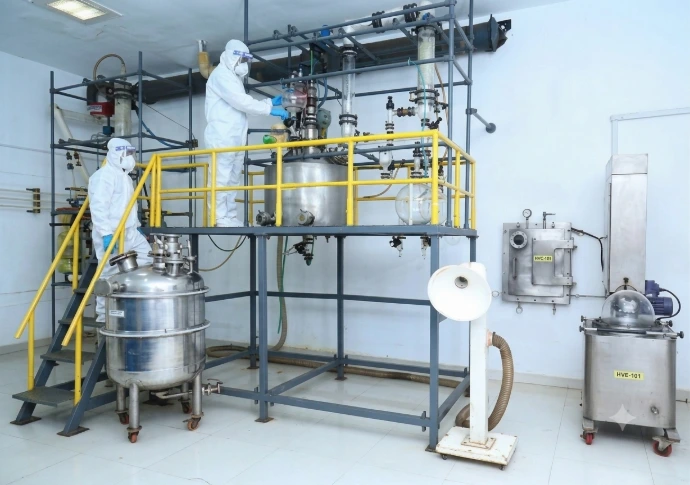
Pharma & Chemical Intermediates
Pharma and chemical intermediates cover key starting materials, synthesis intermediates and active pharmaceutical ingredient precursors that feed into regulated downstream manufacturing. Typical products are manufactured through multi-step organic synthesis followed by crystallisation, filtration and drying to achieve defined purity and polymorphic form. Processing challenges include controlling reaction selectivity, managing polymorph and crystal form during crystallisation, ensuring consistent yield and purity across scale-up, and maintaining the process discipline required for regulated supply chains. Process engineering matters in this industry because purity, form and consistency are not just quality attributes but regulatory requirements — the process itself is effectively part of the product specification.
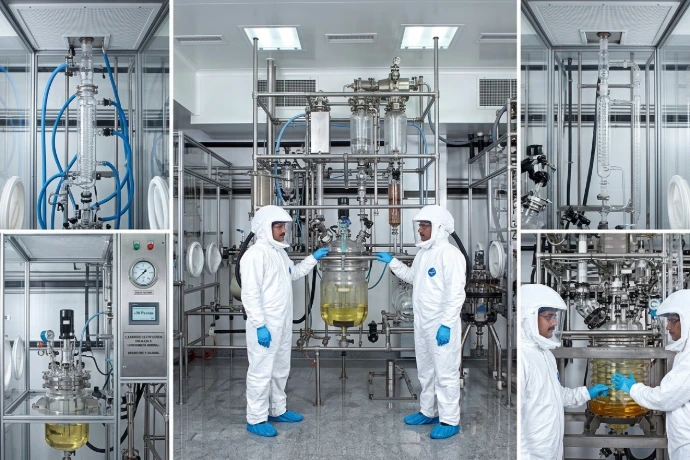
Materials & Products
Material / Product | Application | Typical Processing Requirement | Process Challenge |
|---|---|---|---|
Key starting materials | API and intermediate synthesis feedstock | Defined purity and reactivity profile | Consistent quality across batches |
Synthesis intermediates | Multi-step API synthesis routes | Controlled purity and yield | Reaction selectivity and impurity control |
Crystalline intermediates | Downstream API manufacture | Controlled polymorphic form | Crystallisation and polymorph control |
Chemical intermediates for regulated industries | Agrochemical and specialty pharma applications | Consistent, certifiable purity | Process reproducibility at scale |
Multi-Step Synthesis Engineering
Process Technologies
What it does?
Sequences and controls reaction steps to build the target intermediate.
Why it matters?
Determines overall yield and impurity profile.
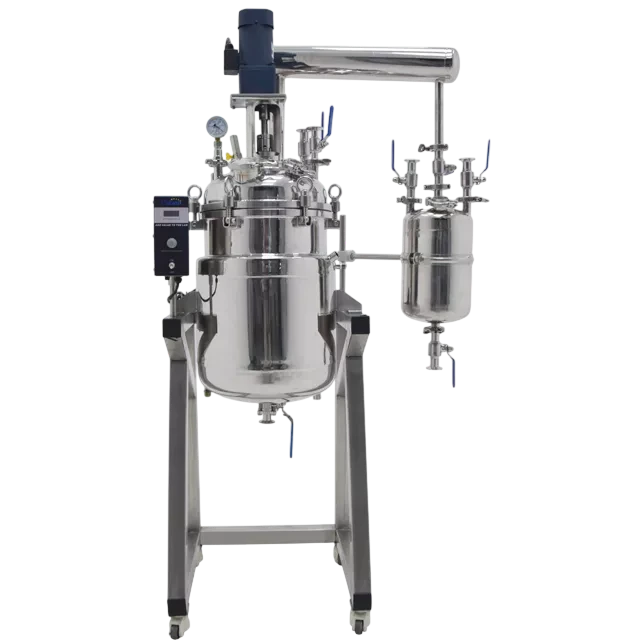
Where it is used?
Core synthesis stage.
Process outcome
Consistent, high-yield reaction output.
Controlled Crystallisation
Process Technologies
What it does?
Manages nucleation and growth to achieve the target crystal form.
Why it matters?
Crystal form directly affects downstream processability and specification.
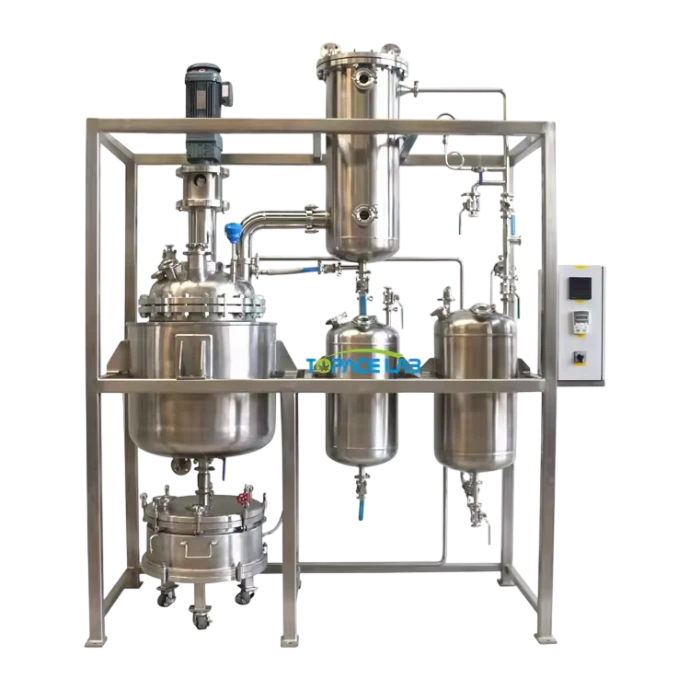
Where it is used?
Post-reaction purification.
Process outcome
Defined, reproducible crystal form.
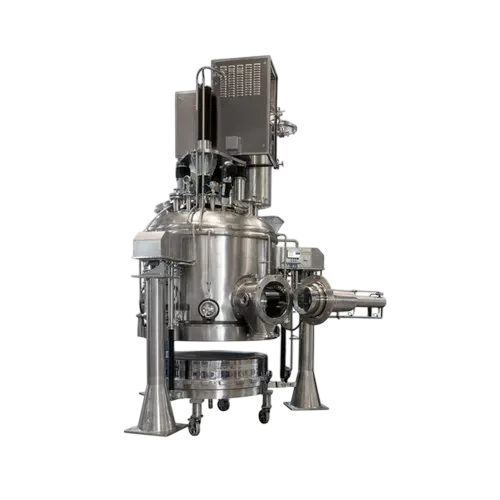
Filtration & Drying
Process Technologies
What it does?
Isolates and dries the crystalline product without degrading form.
Why it matters?
Required to preserve the specified polymorph and purity.
Where it is used?
Downstream of crystallisation.
Process outcome
Stable, on-spec intermediate.
PrakriyaX Capabilities
Applied to battery & energy materials, PrakriyaX capability spans the full value chain from early process concept through to plant implementation:
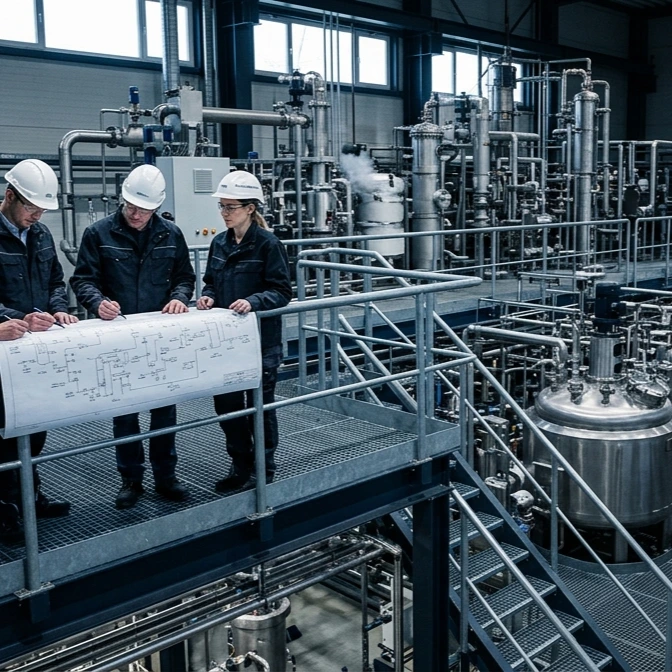
Process Development
- Evaluate routes against feedstock, product specifications and cost targets; develop concepts from bench data and literature.
- Plan and interpret lab/pilot trials and optimize yield, purity, consistency and cycle time.
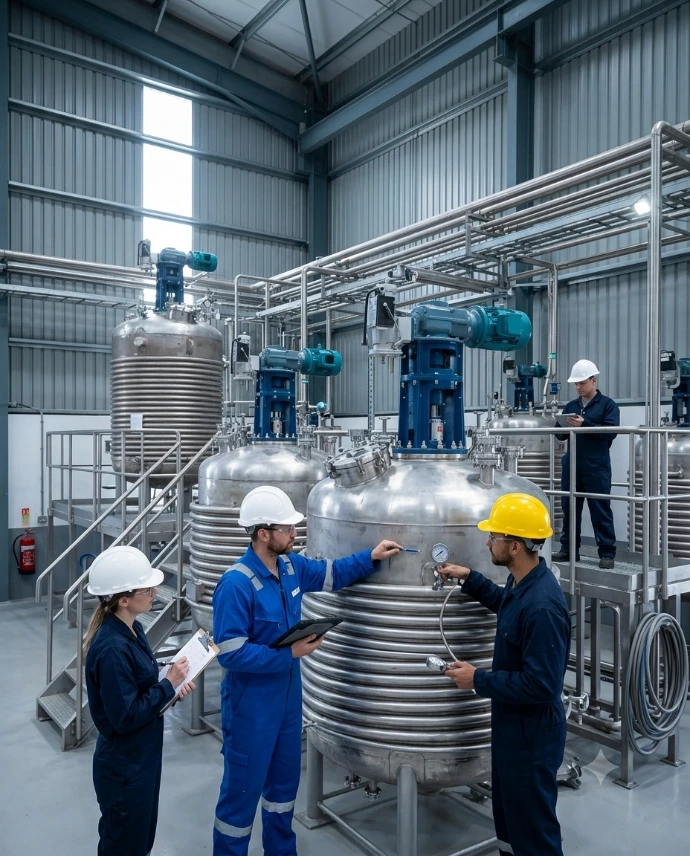
Process Engineering
Process Design — Develop mass & heat balances, equipment sizing, PFDs and key process parameters.
Estimate utility consumption and overall process requirements.
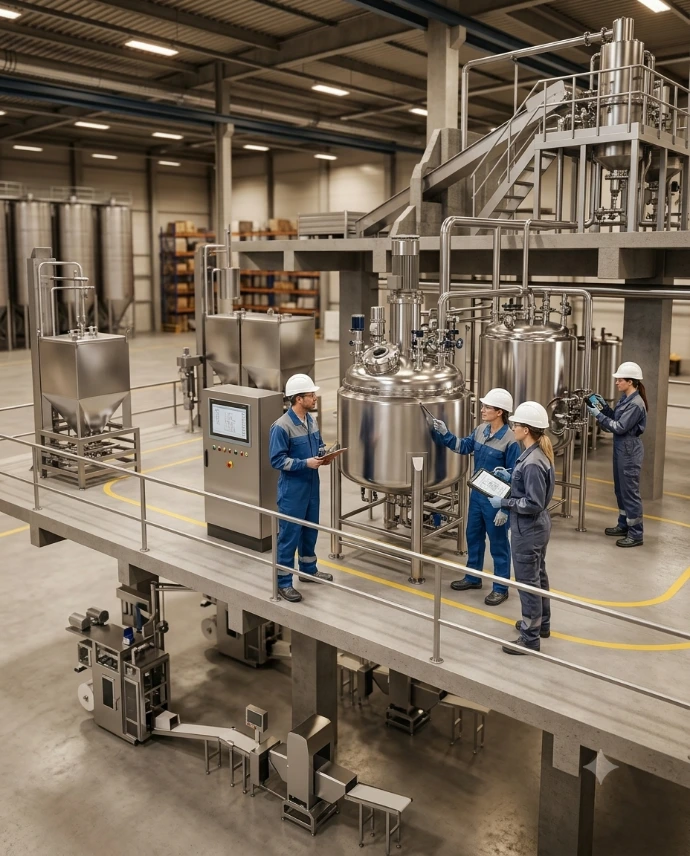
Scale-Up
Laboratory to pilot scale-up planning
Pilot to demonstration scale translation
Demonstration to industrial scale readiness review
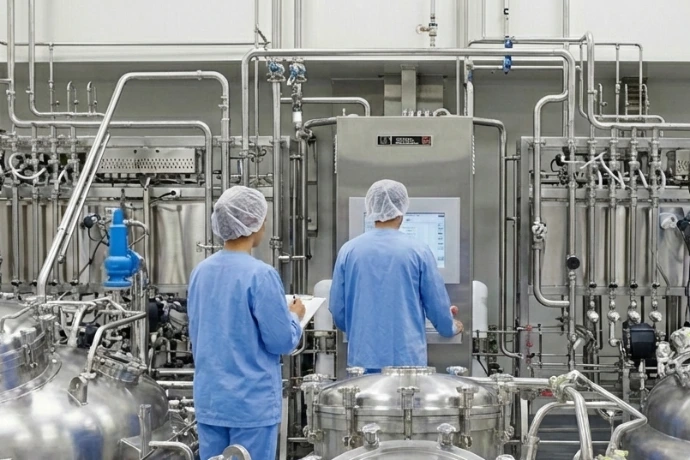
Technology Integration
Process technology selection and comparison
Equipment and unit operation integration
Process intensification opportunities
Automation and control considerations
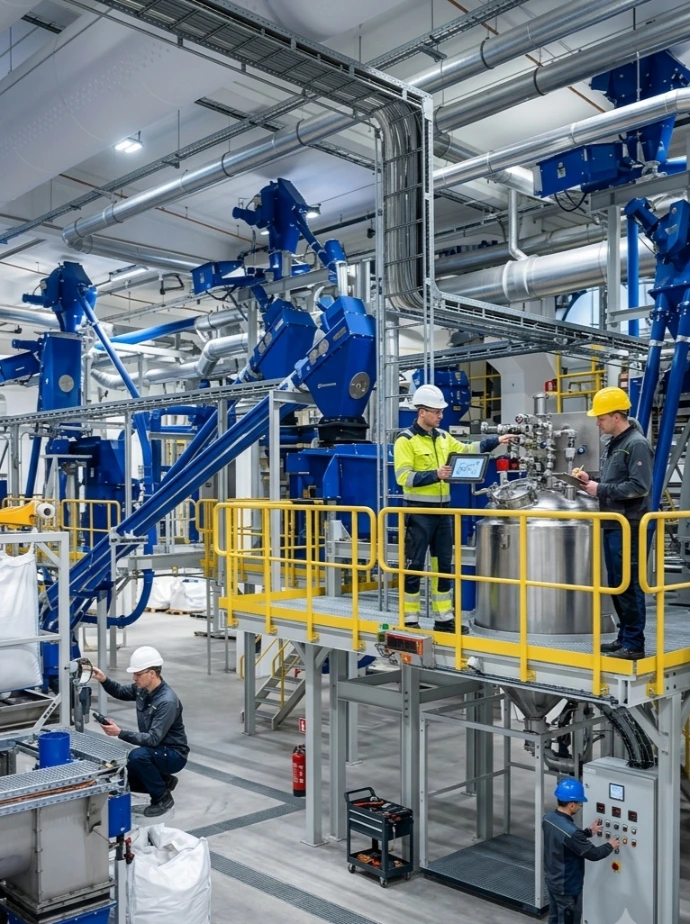
Project Support
Concept engineering and technology basis definition
Basic engineering package development
Detailed engineering coordination
Equipment specification development
Vendor and technology-provider coordination
Plant implementation and commissioning support
Process Technology Matrix
Process Requirement | Relevant Technology | Process Objective | Typical Outcome |
|---|---|---|---|
Reaction selectivity | Multi-step synthesis engineering | Minimise by-product formation | Higher-purity reaction stream |
Defined crystal form | Controlled crystallisation | Target polymorph | Consistent downstream processability |
Form-preserving isolation | Filtration and drying | Preserve crystal form | Stable intermediate product |
Strict purity specification | Purification / recrystallisation | Further impurity reduction | Regulated-grade purity |
Reproducible operation | Process verification and control | Consistent parameter ranges | Reliable batch-to-batch supply |
Key Process Parameters
Parameter | Why It Matters |
|---|---|
Purity | A defining specification for pharma and regulated chemical intermediates. |
Temperature | Controls reaction selectivity and crystallisation behaviour. |
pH | Affects reaction pathway and crystallisation conditions. |
Residence time | Influences conversion and impurity formation. |
Yield | Directly affects process economics for costly synthesis routes. |
Concentration | Affects crystallisation supersaturation and product consistency. |
Have a Process Challenge?
Tell us about your material, process and scale-up requirements in pharma & chemical intermediates.
Frequently asked questions
Here are some common questions about our company.
Pharma and chemical intermediates are compounds produced during multi-step chemical processes and used as starting materials or building blocks for downstream products. Their manufacturing requires controlled reactions, effective purification, consistent quality, and reliable scale-up.
Pharmaceutical manufacturing can involve advanced intermediates, key intermediates, building blocks, specialty chemicals, fine chemicals, and high-purity organic compounds. The required process route depends on the chemistry, purity specification, and intended application.
Common processes include chemical reaction, controlled addition, heating and cooling, extraction, phase separation, crystallization, precipitation, filtration, washing, drying, evaporation, distillation, and solvent recovery.
Process development involves converting a chemical synthesis route into a safe, reproducible, scalable, and economically viable manufacturing process. It includes reaction optimization, work-up development, purification, equipment evaluation, and scale-up planning.
Process engineering helps optimize reaction conditions, yield, purity, cycle time, solvent consumption, energy use, equipment utilization, and batch consistency, while developing a process suitable for industrial operation.
Yes. PrakriyaX can support process route evaluation, process development, scale-up engineering, process optimization, mass and heat balances, equipment selection, PFD development, and process documentation for chemical and pharmaceutical intermediate processes.
Yes. Laboratory processes can be evaluated for scale-up by considering reaction kinetics, mixing, heat transfer, addition rates, residence time, phase behavior, filtration, drying, solvent recovery, and equipment requirements.
Typical challenges include changes in mixing, heat transfer, reaction control, impurity formation, phase separation, crystallization behavior, filtration, drying, and solvent recovery as batch size increases.
Purity is controlled through appropriate reaction control, work-up, extraction, washing, crystallization, precipitation, distillation, filtration, and other purification operations. Process parameters are selected according to the required product specification.
Impurity formation and removal can be addressed through reaction-condition optimization, selective separation, controlled addition, pH adjustment, extraction, crystallization, washing, and other purification techniques.
Reaction optimization involves evaluating parameters such as temperature, pressure, reaction time, reagent ratio, concentration, mixing, addition rate, catalyst loading, and solvent selection to improve conversion, selectivity, yield, and product quality.
Effective mixing ensures uniform temperature, concentration, reagent distribution, and reaction conditions throughout the vessel. Poor mixing can result in localized reactions, inconsistent quality, longer reaction times, or increased impurity formation.
Crystallization is widely used to separate and purify chemical intermediates based on differences in solubility. Proper control of temperature, supersaturation, solvent system, cooling rate, seeding, and mixing can improve purity, yield, and crystal characteristics.
Filtration separates solid products or impurities from process liquids and can significantly affect cycle time, product recovery, washing efficiency, and downstream drying. Filter selection should therefore consider particle characteristics and process requirements.
Solvent recovery involves separating and recovering solvents from process streams for potential reuse or controlled disposal. Efficient recovery can reduce raw-material consumption, waste generation, operating cost, and environmental impact.
Solvent usage can be optimized through solvent selection, concentration control, solvent recovery, process intensification, improved phase separation, and optimized washing and purification strategies.
Drying removes residual moisture and solvents from intermediate products. Drying conditions must be selected to achieve the required specification while maintaining product stability, purity, particle characteristics, and process efficiency.
Yes. Distillation can be used for solvent recovery, solvent exchange, concentration, and separation of volatile components. Process design must consider volatility, composition, operating pressure, energy consumption, and product sensitivity.
Consistency can be improved through defined process parameters, operating ranges, controlled addition rates, mixing requirements, temperature profiles, residence times, separation conditions, and drying procedures.
Yes. Existing processes can be reviewed to identify opportunities for higher yield, improved purity, shorter cycle time, reduced solvent and energy consumption, improved filtration, better drying, and increased production capacity.
Yes. Yield improvement can involve analyzing reaction conversion, selectivity, work-up losses, extraction efficiency, crystallization recovery, filtration losses, mother-liquor losses, and other process stages.
Cycle time can be reduced by optimizing reaction time, heating and cooling, material transfer, phase separation, filtration, washing, drying, solvent recovery, and other batch operations while maintaining product quality.
Material and heat balances establish the quantities of raw materials, solvents, products, by-products, waste streams, and utilities required across the process. They provide a foundation for equipment sizing and process design.
Yes. Process engineering documentation can include process flow diagrams (PFDs), process descriptions, material and heat balances, equipment sizing philosophies, utility requirements, and key process parameters.
Yes. Process engineering documentation can include process flow diagrams (PFDs), process descriptions, material and heat balances, equipment sizing philosophies, utility requirements, and key process parameters.
Depending on the process, equipment may include reactors, agitated vessels, heat exchangers, condensers, extraction systems, centrifuges, filters, dryers, evaporators, distillation systems, pumps, and solids-handling equipment.
Equipment selection considers batch size, process chemistry, temperature and pressure, material properties, mixing requirements, heat transfer, solids handling, filtration characteristics, corrosion considerations, and cleaning requirements.
Yes. A process concept can be evaluated using laboratory data, published information, existing process knowledge, or experimental results to identify a practical route for further development and scale-up.
Cost can be addressed through optimization of raw-material consumption, solvent usage, yield, cycle time, energy requirements, recovery, equipment utilization, and waste generation.